ReptilesAmphibians
© 2002-2013 |
Ornate Box Turtle (Terrapene ornata ornata)
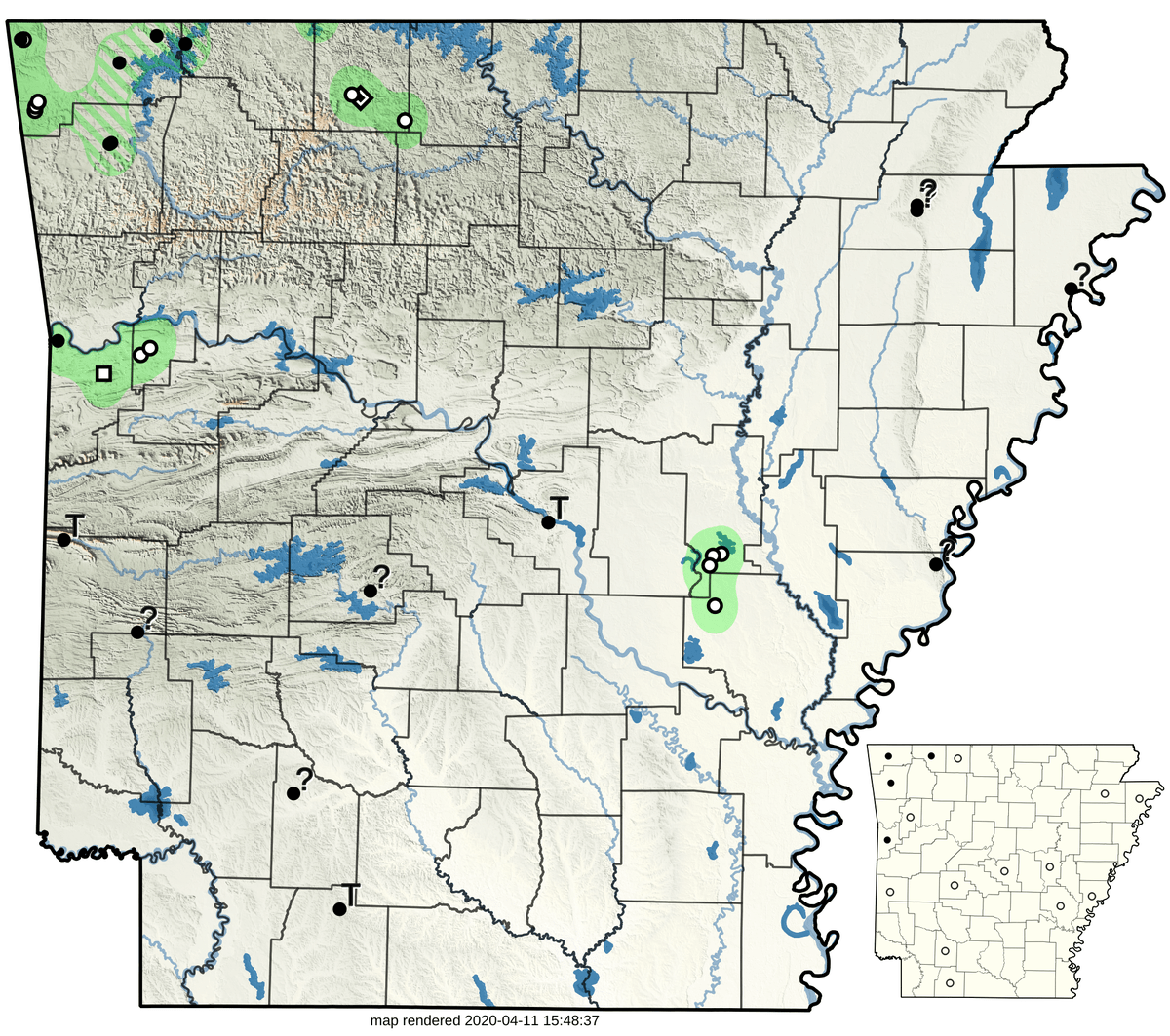
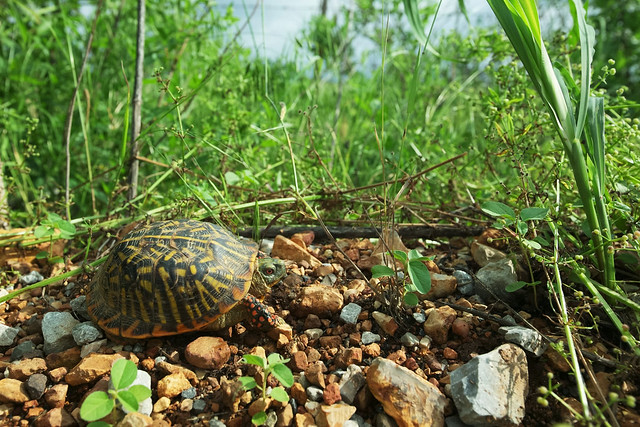
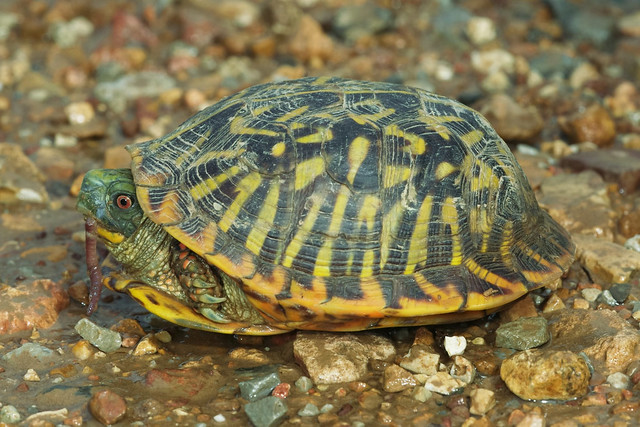
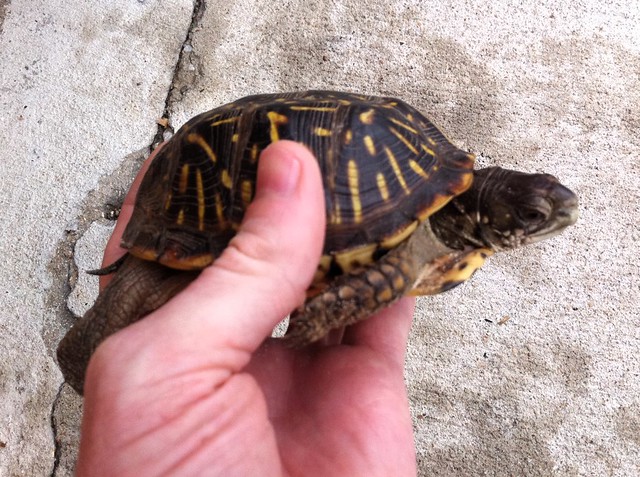
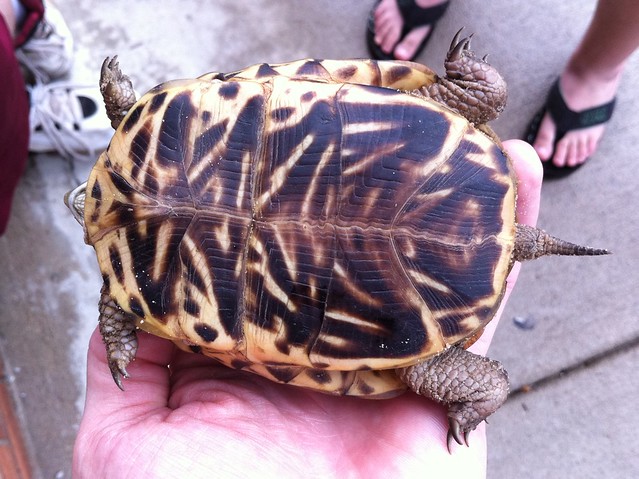
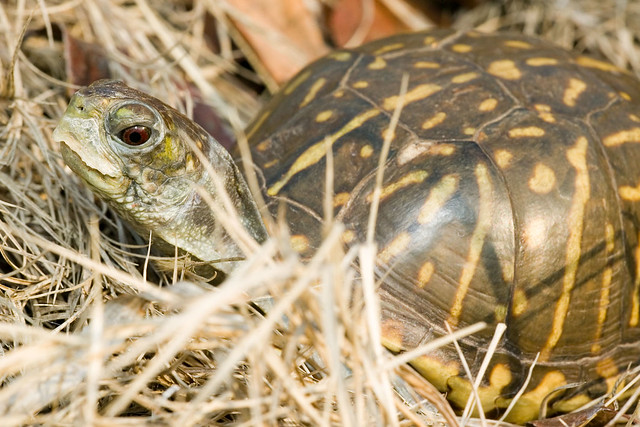
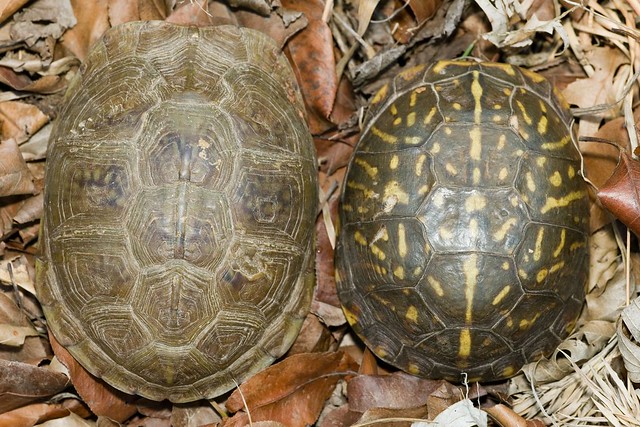
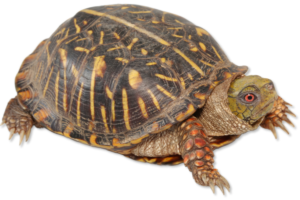
DescriptionThis smallish, terrestrial turtle has a moderately domed shell that is relatively flat on top. Coloration varies greatly, but the carapace is typically black or dark brown with yellow lines radiating from the center of each scute. The plastron is boldly patterned in black and yellow "brush strokes". Head, neck, and limb coloration may include browns, blacks, oranges, and yellows arranged in no clearly discernible pattern. Adult males of this species have a slightly concave plastron; bright red eyes; and relatively longer, thicker tail. Adult females have a flat plastron; brown or dull red eyes; and relatively shorter, thinner tail. Juveniles have a slightly keeled, less-domed carapace than adults. A single sub-species, the Ornate Box Turtle (Terrepene ornata ornata) inhabits the state. This species can be easily confused with the more common Three-toed Box Turtle (Terrepene carolina triunguis). While numerous distinguishing characteristics exist, assurance of identification is most easily achieved by considering the plastron markings. While the plastron of a Three-toed Box Turtle is generally plain, the Ornate Box Turtle has a plastron of bold, black and yellow "brush strokes": This species is also known as a Terrapin, or (incorrectly) Tortoise. HabitatsThis species inhabits prairies or farmland of former natural prairies. Habits and Life HistoryPrey and Hunting TechniquesThis species is primarily a carnivore, consuming a wide variety of smaller prey such as insects, worms, snails, etc. It is an opportunistic feeder that is also known to scavenge. A small amount of vegetation (berries, mushrooms, etc.) may also be consumed. Temperament and DefenseWhile generally mild-mannered, this species can be a bit more "nippy" than its cousin, the Three-toed Box Turtle. When first captured, a specimen is most likely to seal up tightly into its shell. ConservationThis species is affored special protections and should not be collected or disturbed. The reduction of natural prairie habitats in Arkansas is of major concern. Other threats include road mortality and collection. Their slow life cycle may leave populations particularly vulnerable to even slight alterations of the ecosystem. A 2007 citizen-scientist survey of box turtles, coordinated by the Arkansas Natural Heritage Commission, should shed light on the current status of the species in the state. State Distribution and Abundance
GalleryContributors
Bibliography
Discussion
|