ReptilesAmphibians
© 2002-2013 |
Northern Diamond-backed Watersnake (Nerodia rhombifer rhombifer)
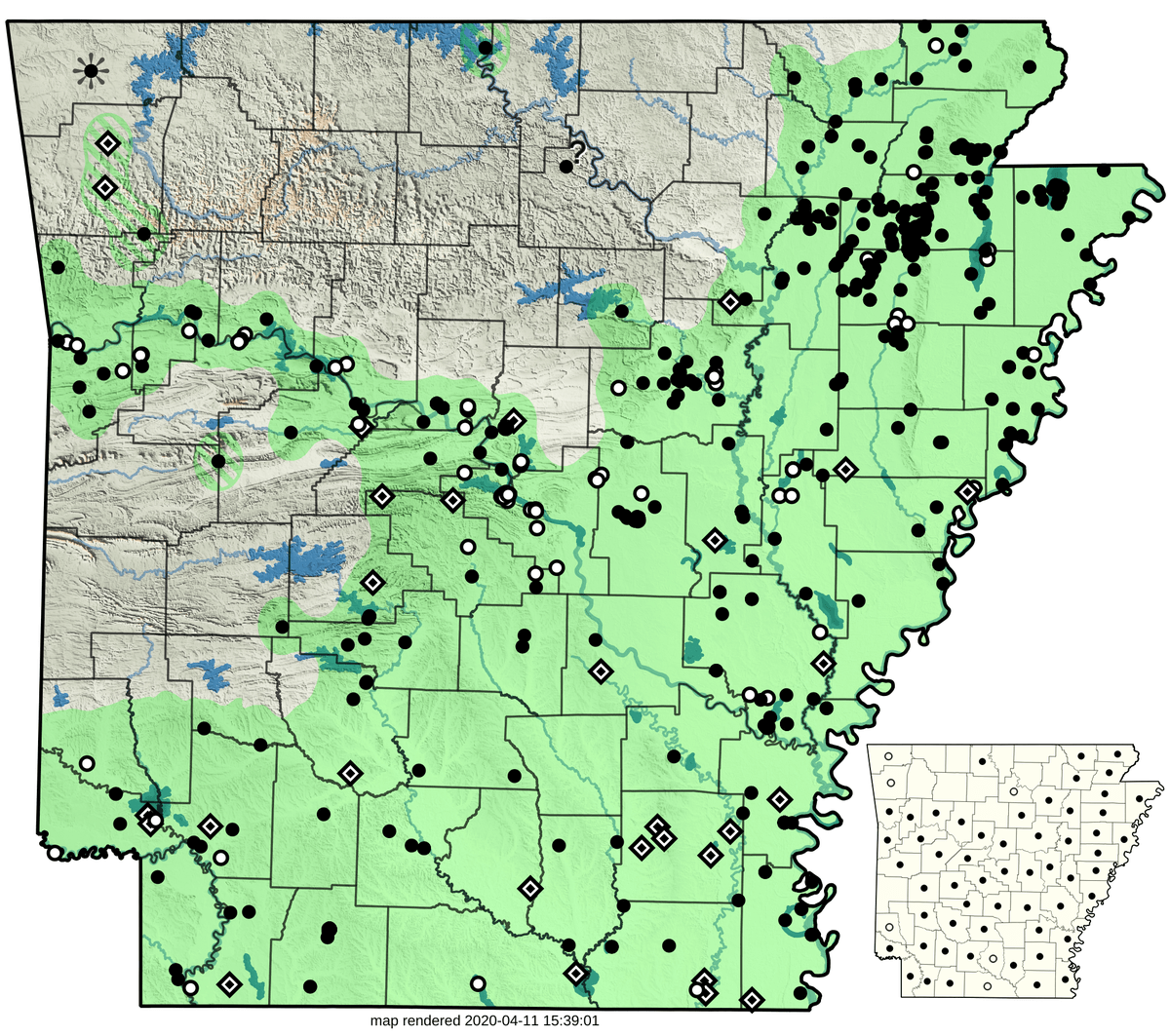
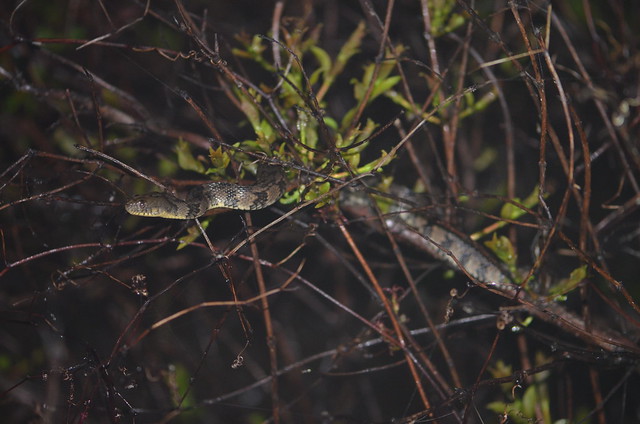
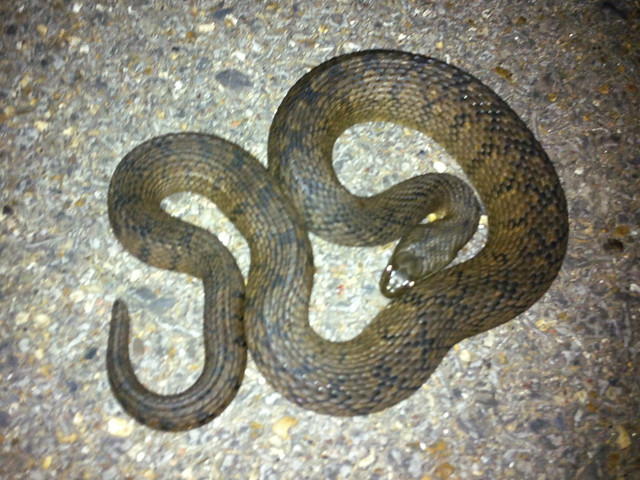
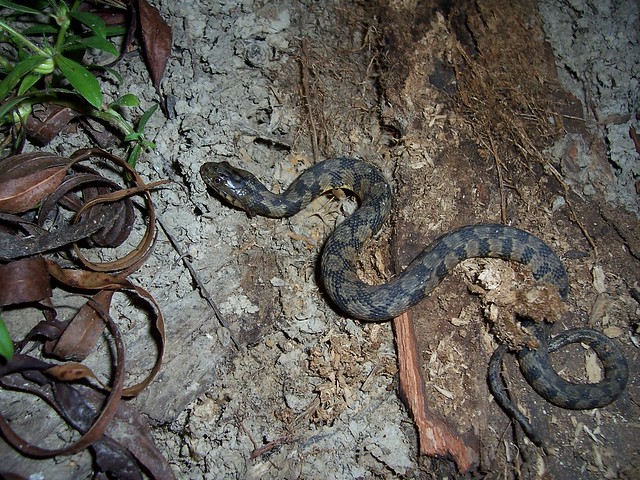
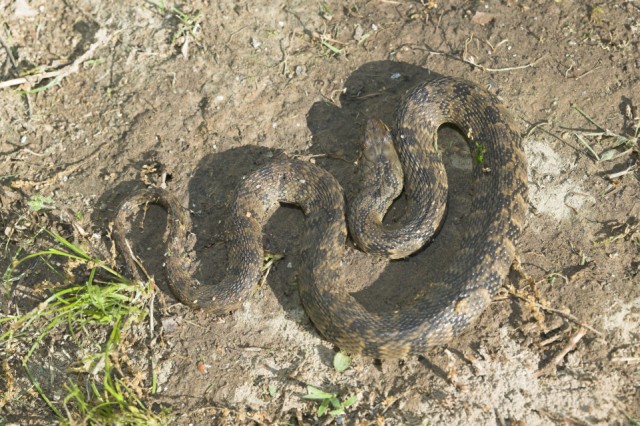
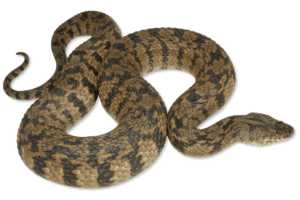
DescriptionThis stoutly-built aquatic species is generally brown to olive with a dark, chainlike pattern down the back. The belly is yellowish with dark, half-moon spots that occur irregularly but are concentrated at the sides. Distinguishing this species from other nonvenomous watersnakes and, more importantly, from the venomous Cottonmouth takes a discerning eye that must be trained. Refer to each species account to learn the subtle differences. HabitatsThis species occurs in a variety of wetland habitats: swamps, lakes, ponds, rivers, etc. It is mostly a lowland species and is uncommon in the Ozark and Ouachita Mountains. Habits and Life HistoryThis species can be observed during daylight hours basking along the banks of water. It is known to bask in branches and vines overhanging the water. (Cottonmouth are not known to exhibit this same tree-basking behavior.) Although this species may occasionally forage during the day, it is usually more active at night. The seasonal activity of this species correlates with the temperature of water and, to a lesser extent, ambient temperature. When the water and ambient temperatures reach their highs in late summer, this is also when you can expect the most activity from watersnakes. This species breeds in early spring. In early fall, females will give birth to live young. ![]() Prey and Hunting TechniquesThis species feeds primarily on fish. To hunt, it will find a spot with plenty of fish activity in and around rock crevices or submerged logs. It will sway from side to side with its mouth partially agape until a fish snags on its hook-like teeth. Then snap! If the prey is larger and unwieldy in the water, it may drag it to the shoreline for consumption. Temperament and DefenseThis species will make a hasty retreat into the nearest water when approached. If escape is not possible, it has quite an unsavory temperament. Like other watersnakes of the genus Nerodia, it will thrash, bite, and musk. ConservationMany people mistake this species for a venomous Cottonmouth and kill it on sight. This is especially true at rural farm ponds and fish farms where people try to "protect" their fish stock. Despite persecution, populations of this species appear secure. State Distribution and Abundance
GalleryPlain-bellied Watersnake x Northern Diamond-backed WatersnakeContributors
Bibliography
Discussion |