ReptilesAmphibians
© 2002-2013 |
Texas Coralsnake (Micrurus tener tener)
Description
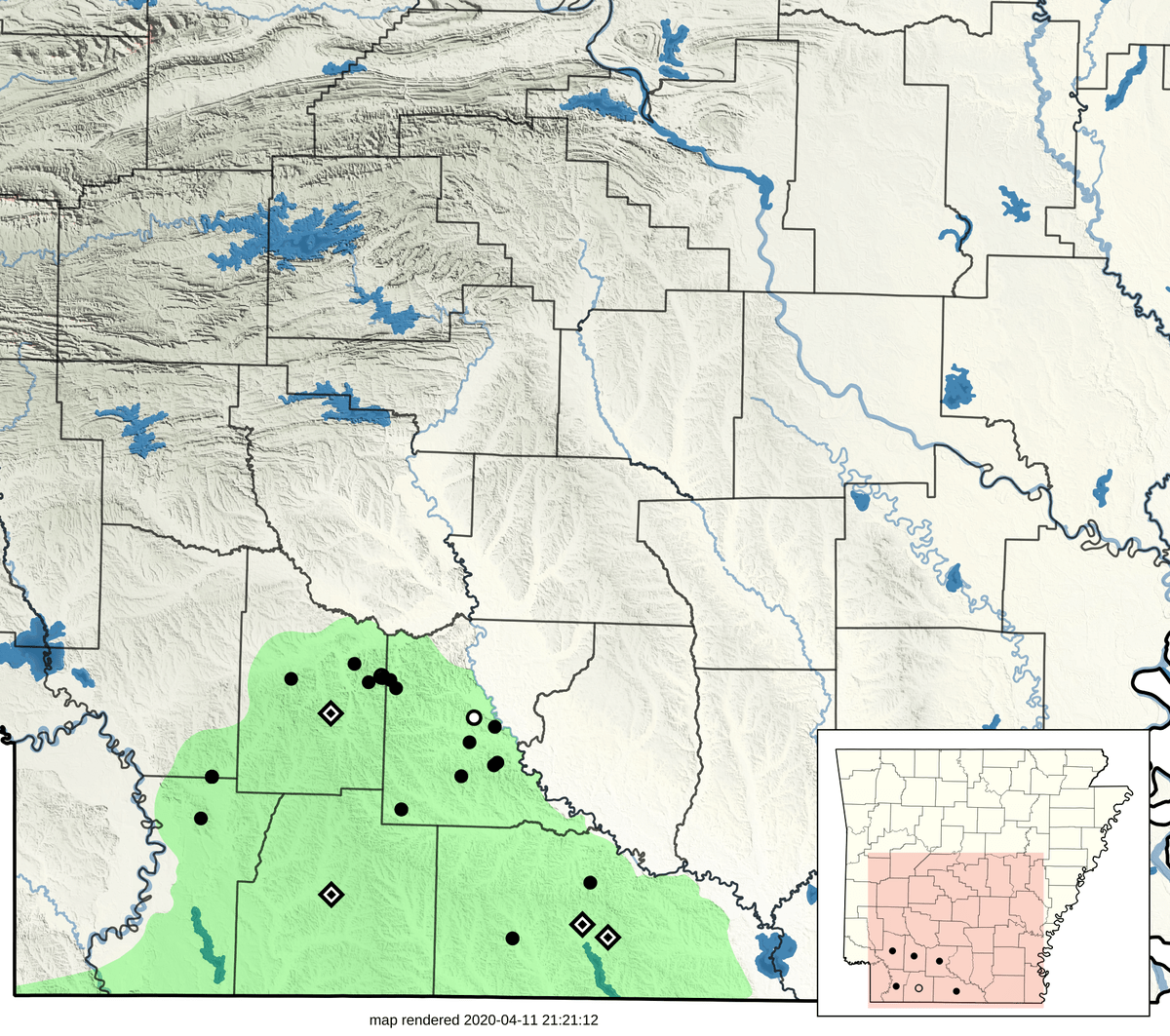
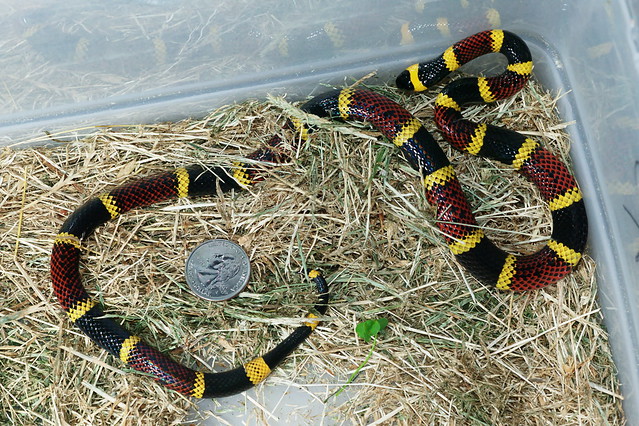
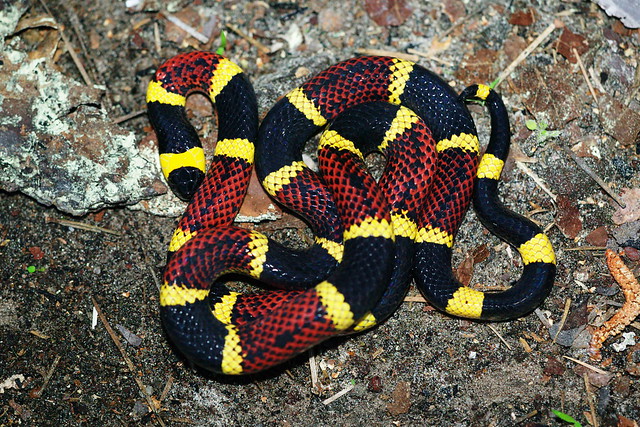
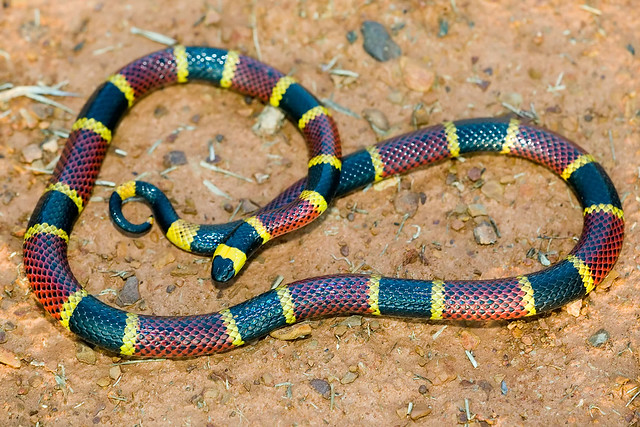
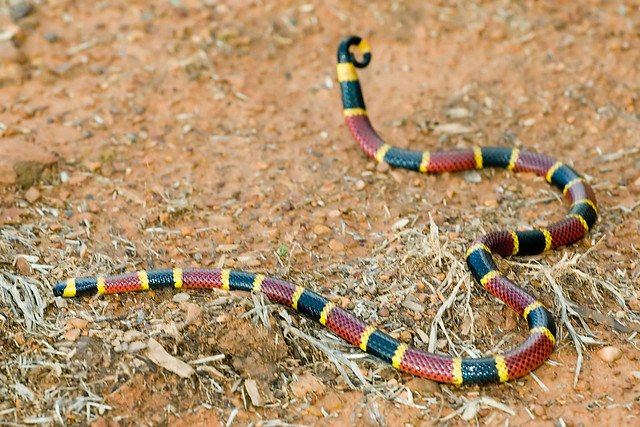
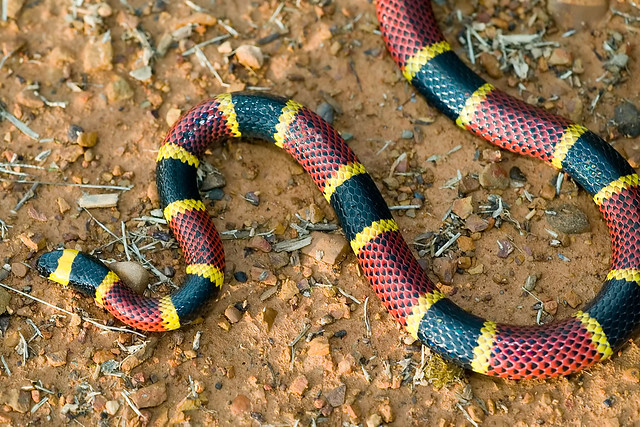
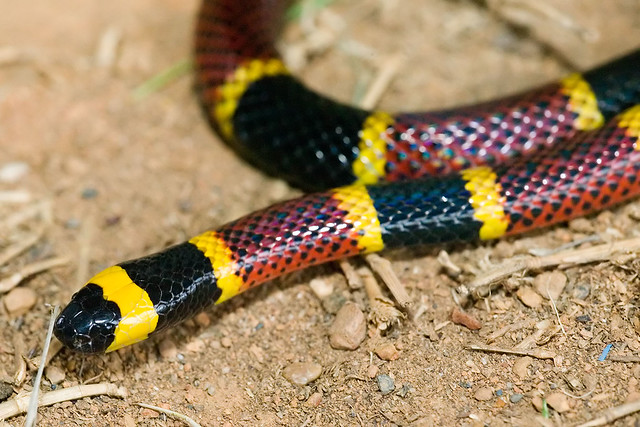
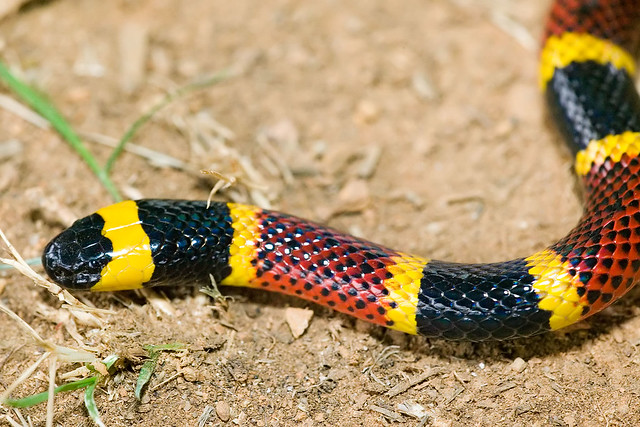
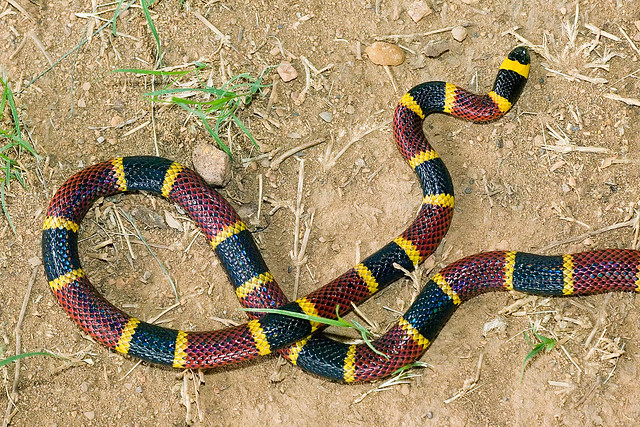
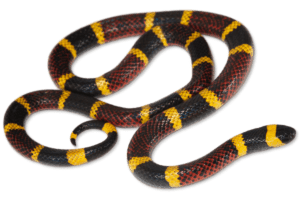
The snout of this species is completely black and blunt. Its eyes are dark and beady. Similar-looking nonvenomous snakes typically have a cream-colored or red snout and larger, more prominent eyes. Unlike the other venomous snakes in Arkansas, Coralsnakes are not Pit Vipers. Thus, they lack heat-sensing pits, vertical pupils, stout bodies, and "diamond-shaped" heads (all traits that are used--or more often misused--by laypersons attempting to identify a snake as venomous or not). This species, in fact, is an Elapid. Its closest relatives are Cobras, Mambas, and Seasnakes. This snake is also known as the "Kill a Fellow" Snake or Tricolored Snake. ![]() HabitatsThis species of snake is fossorial; spending the vast majority of the time buried in the soil, under leaf litter, or perhaps in rotten logs. It is secretive and rarely seen exposed, despite the fact that it is largely diurnal (active during the day). Habits and Life HistoryRelatively little is known about habits and life history for this species, especially in Arkansas. This is the only venomous species in the state that lays eggs. These are likely laid in June, with hatching in August or early September. Prey and Hunting TechniquesThis species is an active forager. They seek out small, fossorial snakes (such as Ring-necked Snakes) and lizards. Prey is seized and "chewed" until it is immobilized by the injected venom. Prey is then swallowed whole in typical snake fashion. Because of their diet of slender food items, this species has a smaller, less-flexible mouth than most snake species. Temperament and DefenseThe best defense this species has from most predators is secrecy. Second to that would probably be its pattern and coloration. The red and yellow bands act as a warning, saying "Stop, I'm a dangerous animal", or "You don't want to eat me, I taste terrible!" Of course, the coloration only jumps out to a human who happens to uncover one. Most people see the red and yellow bands as a sign saying "Kill me!" If they feel threatened, Coralsnakes may jerk when touched, then dart away very quickly. They seem to feel more secure when their head is hidden, even if their body remains exposed. They sometimes will actually "strike" with their tail. This protects their vital head while distracting a potential predator. Coralsnakes are entirely unassuming and inoffensive. Their first and primary reaction when uncovered is to hide. They are uninclined to bite in defense, even if handled (not that they should be handled!). It is difficult to imagine many scenarios where a legitimate bite from this species might occur. ConservationThis species currently has no special protections in Arkansas. However, it is listed as extremely rare in the state by the Arkansas Natural Heritage Commission. It is difficult to know whether it is rarely encountered, or truly rare! Further research is needed. Unfortunately, it is not popular with the public to lawfully protect snakes (let alone venomous ones!). It would be a shame to leave the Texas Coralsnake vulnerable to extirpation, just because of a misguided popular opinion. Many Coralsnake mimics (such as Milksnakes) are killed needlessly because of their similarity in appearance, even in places north of the Coralsnake range. A large number of people erroneously believe that the Coralsnake ranges throughout the state. State Distribution and Abundance
GalleryContributors
Bibliography
Discussion< Western Pygmy Rattlesnake | Snake | Northern Scarletsnake > |